
 Optical Instruments > CPL Spectrophotometer CirCLa
NEW Affordable yet high-performance CPL Spectrophotometer CirCLa
PDFCirCuLarly Polarized Luminescence Spectrophotometer Based on a Photon Counting Method
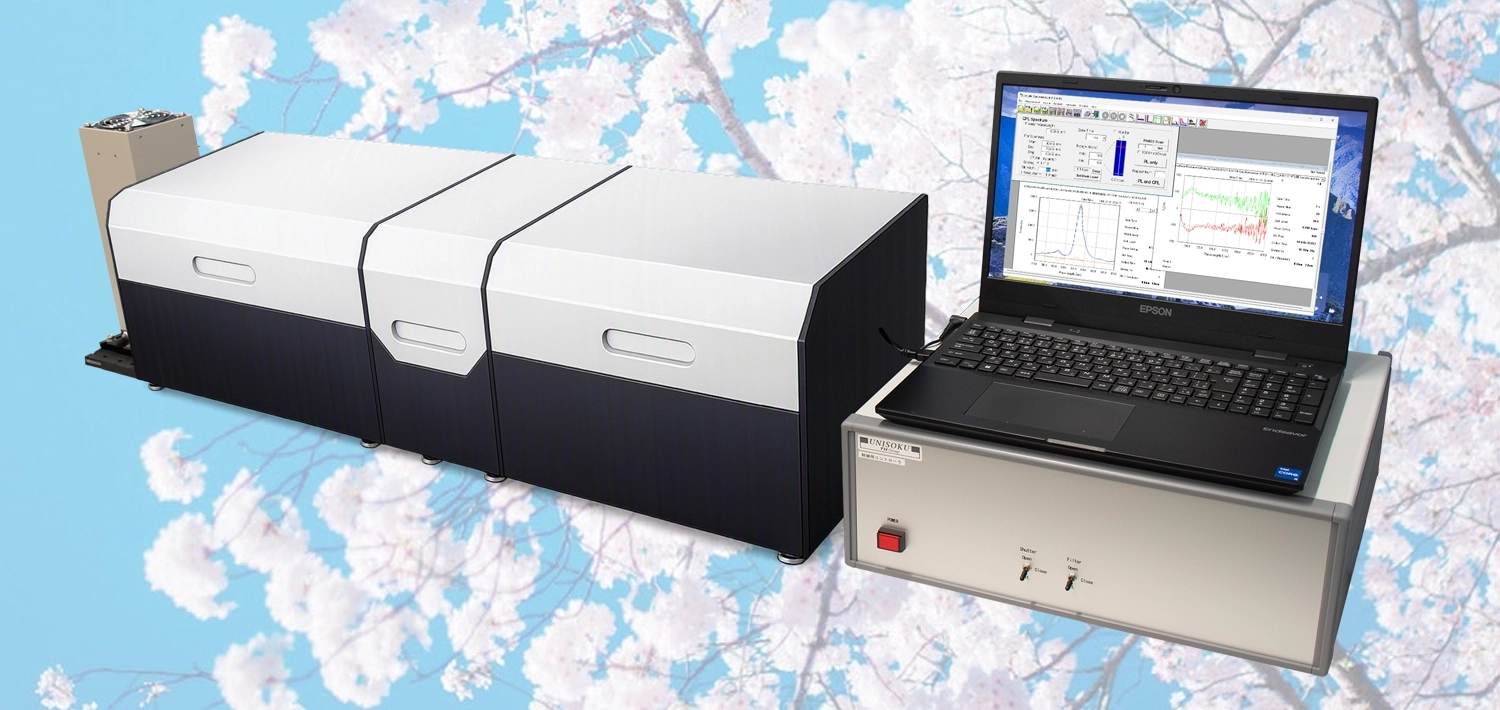
Key Features
180° Configuration Applicable to both Solution/FilmsSelection of Excitation Wavelength by Xe Lamp + Bandpass Filters
Photon-Counting Acquisition Synchronized with PEM Enables Direct Calculation of Dissymmetry Factors, glum
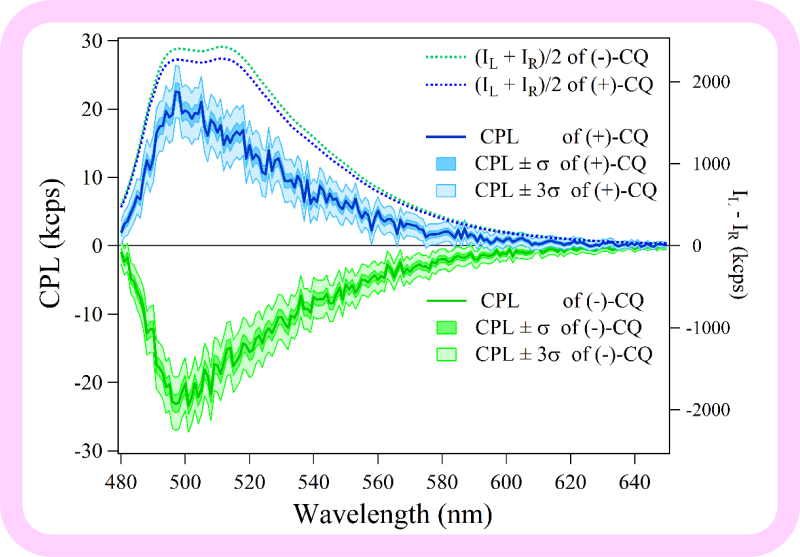
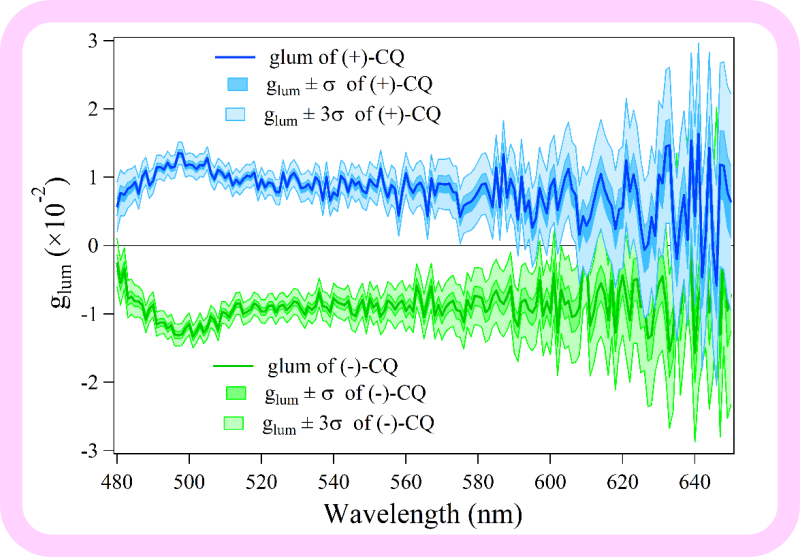
Why Use Photon Counting for CPL Measurements?
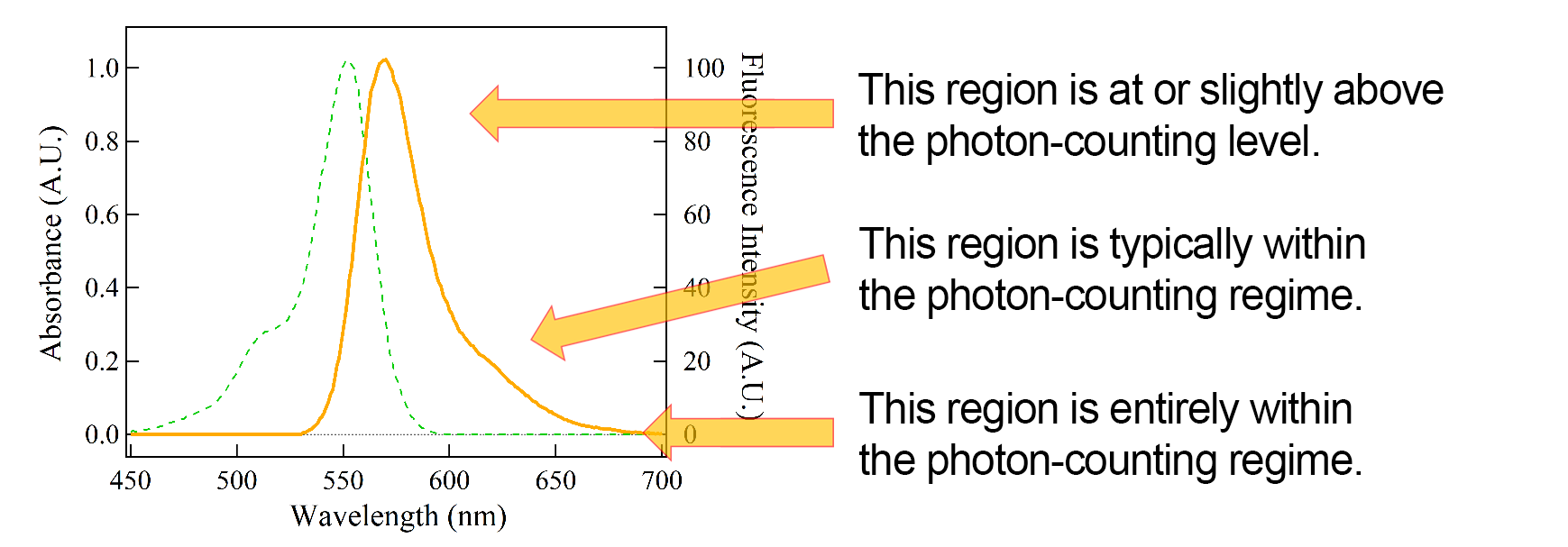
In luminescence spectroscopy, the detected light intensity is often at the photon-counting level, typically below 1 × 10⁷ photons/s.At High Light Intensities (Large Numbers of Photons)
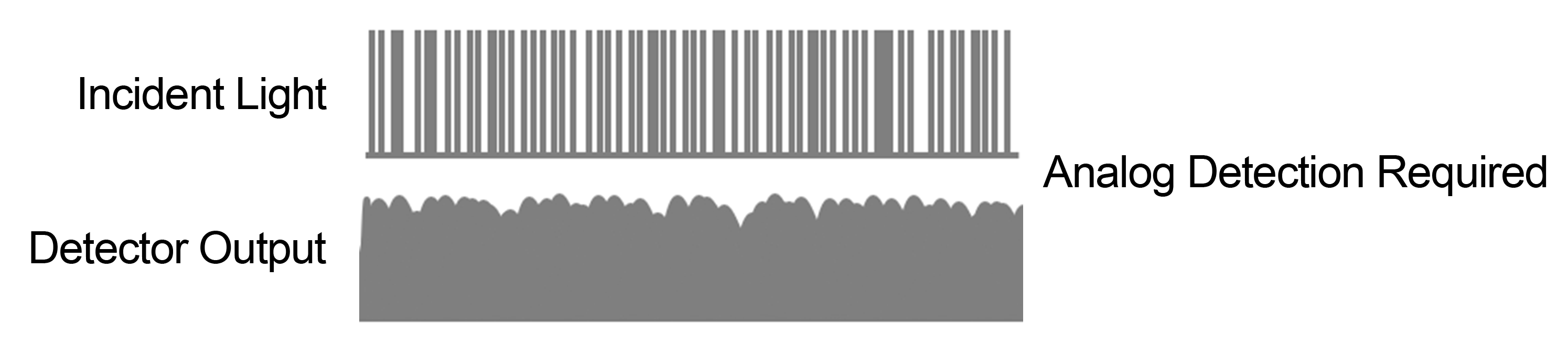
At Low Light Intensities (Small Numbers of Photons, Typically Below 1 × 10⁷ Photons/s)
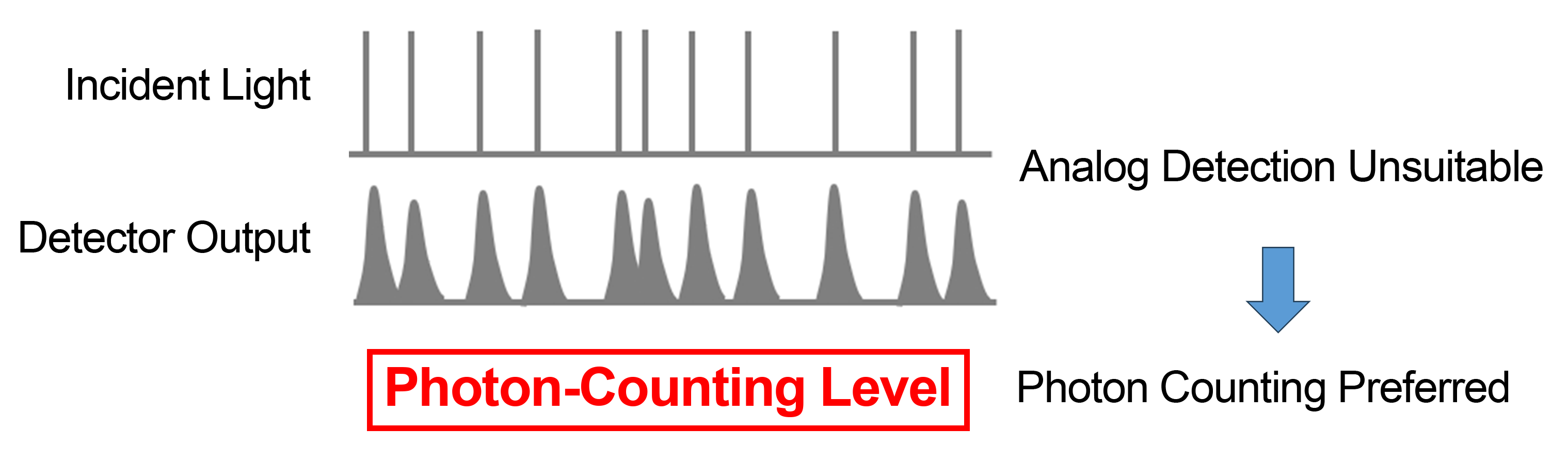
When the detected light intensity is at the photon-counting level, photon-counting detection can provide a high signal-to-noise ratio (SNR), making it particularly advantageous for measuring weak luminescence signals.
How Many Photons Are Actually Detected in Luminescence Spectroscopy?
(Typical Example)
Effective excitation power:~ 100 µW @500 nm = 2.5 × 10¹⁴ photons/s
Quantum yield: φF ~ 0.1
Spectral bandwidth of the spectrophotometer : 5 nm
→ Approximately 1/10 of the total spectral area → φB≒ 0.1
Detection solid angle: ~ 0.02π steradian → φS=0.02π/4π≒0.005
Diffraction grating efficiency of the spectrophotometer:φG ~ 0.4
Quantum efficiency of the detector (photomultiplier tube, PMT) @500nm: φD ~ 0.1
∴ Detected photon rate (photons/s) ≒ 2.5 × 10¹⁴・φF・φB・φS・φG・φD ≒ 5 × 10⁸
In practical measurements, the detected photon rate is often substantially lower than this estimated value.
Advantages of Photon-Counting CPL Measurements
1. Non-Negative Photon Counts
In conventional analog CPL measurements, the detected light intensity is recorded as a DC signal, which may become negative due to electrical noise or baseline drift.
In contrast, photon-counting detection measures the number of detected photons directly. Since photon counts are inherently non-negative, negative intensity values caused by electrical fluctuations are avoided.
2. Direct Calculation of the Luminescence Dissymmetry Factor (glum)
In conventional analog CPL measurements, the sum (IL + IR) and difference (IL - IR) of the left- and right-circularly polarized luminescence intensities are typically measured using different amplification gains.
As a result, gain correction is required to obtain accurate glum values.
With photon-counting detection, glum is calculated directly from the measured IL and IR photon counts, eliminating the need for such gain corrections.
3. Independent Measurements at Each Wavelength
In conventional analog measurements, the lock-in amplifier time constant and wavelength scanning speed can cause signals measured at preceding wavelengths to influence subsequent wavelengths.
Photon-counting detection allows measurements to be performed independently at each wavelength, avoiding this type of signal carryover.
4. Improved Measurement Reliability
In conventional analog measurements, it can be difficult to determine whether a background signal measured without a sample originates from detector dark current or stray light.
Photon-counting measurements facilitate the evaluation and separation of these background contributions, helping improve measurement accuracy and reliability.
| Measurement Method | 2 ch. Photon-Counting Synchronized with PEM |
|---|---|
| Photoelastic Modulator (PEM) | Made by HINDS Instruments. 50 kHz. |
| Optical Configuration | 180° Excitation |
| Measurable Samples | Solution, Transparent Film |
| Excitation Light Source | 150 W Xenon Lamp |
| Exc. Wavelength Selection | Bandpass Filters in Motorized Filter Wheel (select up to 5 wavelengths at the time of purchase) (additional filters available, one-touch exchange) |
| Emission Monochromator | Grating-Based Czerny-Turner Type |
| Detector | Photon-Counting Photomultiplier |
| Measurement wavelength | 280-800 nm |
| Wavelength step | 0.1 nm to 20 nm |
| Spectral resolution | 1 ~ 36 nm (by Manual Slits) |
| Sample Temp. Control | Available as Option |
| Software | Simple GUI and easy to use, Direct and automatic calculation of glum, Calculation of Noise Level |